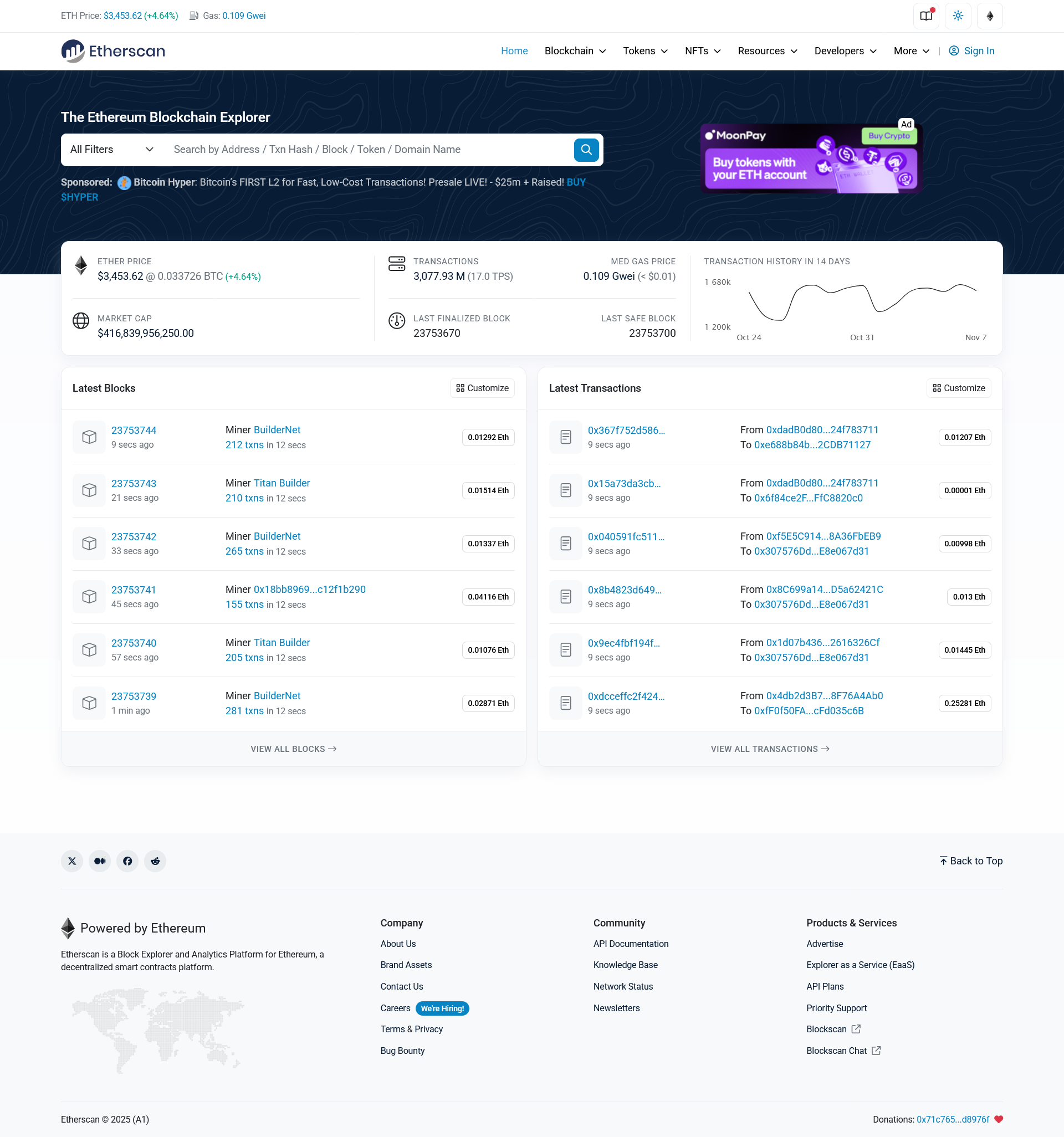
Etherscan: A Comprehensive Guide to the Ethereum Blockchain Explorer :-
Etherscan is one of the most widely used blockchain explorers in the Ethereum ecosystem. It provides users with a transparent and user-friendly way to view, verify, and analyze transactions, smart contracts, wallet addresses, and on-chain data on the Ethereum blockchain. As Ethereum continues to power decentralized finance (DeFi), NFTs, and Web3 applications, Etherscan has become an essential tool for developers, investors, and everyday users alike.
What Is Etherscan ?
Etherscan is a blockchain explorer specifically designed for the Ethereum network. Launched in 2015, it allows anyone to search and inspect blockchain data in real time. While it is not a wallet or an exchange, Etherscan acts as a window into Ethereum’s public ledger, making blockchain activity transparent and accessible.
Key Features of Etherscan ;
1. Transaction Tracking :-
Etherscan enables users to track Ethereum transactions using a transaction hash (TXID). This feature provides detailed information such as:
. Transaction status (pending, successful, or failed)
. Block confirmation
. Gas fees paid
. Sender and receiver addresses
This is especially useful for verifying transfers, troubleshooting delays, or confirming payments.
2. Address and Wallet Lookup :-
Users can search any Ethereum address to view:
. ETH balance
. Token holdings (ERC-20, ERC-721, ERC-1155)
. Transaction history
. Interactions with smart contracts
This functionality supports transparency and helps users monitor their own wallets or analyze others (for research or auditing purposes).
3. Smart Contract Verification :-
Etherscan allows developers to publish and verify smart contract source code. Verified contracts increase trust, as users can inspect the logic and ensure the contract behaves as intended. Verified contracts are also easier to interact with directly through Etherscan’s interface.
4. Token and NFT Explorer :-
Etherscan provides detailed pages for Ethereum-based tokens and NFTs, including:
. Token supply and holders
. Transfer history
. Contract details
This is particularly valuable for evaluating new projects or tracking NFT ownership.
5. Gas Tracker :-
The Gas Tracker shows real-time gas prices on the Ethereum network. Users can estimate transaction costs and choose optimal gas fees based on current network congestion.
Why Etherscan Is Important :-
Transparency: All Ethereum activity is public, and Etherscan makes it readable and searchable.
Security: Users can verify transactions and contracts independently without relying on third parties.
Developer Support: APIs, analytics tools, and contract verification make Etherscan indispensable for Ethereum developers.
Education: Beginners can learn how blockchain transactions work by exploring real data.
Etherscan for Developers
Beyond basic exploration, Etherscan offers APIs that allow developers to:
. Retrieve blockchain data programmatically
. Monitor addresses and transactions
. Build analytics dashboards or Web3 applications
These APIs are widely used across the Ethereum ecosystem.
Limitations of Etherscan :-
While powerful, Etherscan has some limitations:
. It does not support direct transaction signing like wallets do
. Understanding data may be challenging for beginners
. It only reflects on-chain activity, not off-chain agreements or intent
Still, these limitations are inherent to blockchain explorers rather than Etherscan itself.
Conclusion :-
Etherscan is a foundational tool in the Ethereum ecosystem. By offering transparency, reliability, and deep insight into blockchain activity, it empowers users to verify transactions, audit smart contracts, and explore decentralized applications with confidence. Whether you are a developer, investor, or curious newcomer, mastering Etherscan is a key step toward understanding Ethereum and Web3.